
Swiss CNC Machining Factory
The factory sits in Hengli Town, Dongguan, in the Pearl River Delta — a region that concentrates machining capacity the way other regions concentrate finance or software. The address:
No. 8, Shuibian Songyuan Road, Hengli Town, Dongguan, Guangdong, China 523470.
Being in Dongguan matters for two reasons you should weigh deliberately. First, the supplier base for raw bar, plating, heat treatment, and tooling is dense, which shortens the handoffs that a slender part picks up between operations. Second, it is reachable — Dongguan is a short trip from Shenzhen and Hong Kong, and we open the floor to visits and audits. A location claim is easy to fake; a factory you can walk through is harder.
Who Runs the Place, and Who Talks to Buyers?
The floor is run by a technical team — over 80% skilled technicians, around 60% with five to ten years of experience — and the buyer-facing contact is an engineer, not a call center. Felipe Iglesias handles quotes and technical review directly at [email protected], which means the person reading your drawing is the person answering your tolerance questions.
The sales team works in English, Japanese, Portuguese, Spanish, and French, and after-sales support runs through partners in Japan, the UK, Canada, and Australia, so a buyer in those regions is not left chasing a time zone alone. The distinction matters: on a slender part, the clarifying question about a tolerance is worth more than a fast generic quote, and an engineer-led contact is the one who asks it.
How Does the Factory Handle Environmental Responsibility?
Machining is a resource-heavy trade, and the factory runs under ISO 14001:2015 — environmental management tied to the machining of metal parts. In practice that means a roof covered with solar panels generating roughly 20,000 kWh of green power a month, and documented controls for noise, waste water, and air emissions.
The labor side is governed by the same seriousness: no forced or child labor, contracts signed on day one, social insurance for every employee, legal working hours with at least one rest day a week, and overtime paid as required. A code of conduct covers ethics, anti-bribery, confidentiality, and IP protection — including how customer drawings and data are stored and disposed of. For you sending a proprietary slender-shaft design, that last point is not a footnote.
The environmental controls and the labor standards are two halves of the same discipline: a shop that runs a documented, third-party-surveilled system is one where the process is written down, not improvised. For you sending a proprietary slender-shaft design, the IP and confidentiality clauses in that system matter as much as the machine list — a drawing that leaves the building is a part that can be copied, and the controls that protect it are part of what you are buying.
What Should You Ask Before Visiting?
Whether you buy from this factory or another, a visit is only useful if you know what to look for. Ask these questions of any shop — including this one.
- Can I see the machine list with makes and models? A manufacturer produces it; a reseller changes the subject.
- Which machines are running the day I visit? A floor that is dark on a weekday is a floor that is not producing.
- Where is the inspection bench? The metrology room tells you more about a shop's real tolerances than its website does.
- Who signs the inspection reports? A named, accountable person beats an anonymous stamp.
- How are customer files protected? For a proprietary slender-shaft design, ask how drawings and data are stored and disposed of.
Schedule a visit or a live video walkthrough through [email protected], and hold us to the same list.
Which Certifications and Registrations Back This Floor?
A factory's paperwork is the cheapest pre-audit you can run, because a certificate means a third party has already walked the floor and checked the system. We hold three, with the numbers stated so you can verify them rather than take a logo on faith.
| Standard | Certificate number | What it covers |
|---|---|---|
| ISO 9001:2015 | 116024/A/0001/UK/En | Quality management for machining of metal parts |
| IATF 16949:2016 | 131941/A/0001/SM/En | Automotive-quality manufacture of CNC metal parts |
| ISO 14001:2015 | 116024/B/0001/UK/En | Environmental management for machining of metal parts |
The company itself is registered as Dongguan Zhuohang Ltd under number 91441900MA4UWT6X39, founded in 2005 — details you can check against public records before a visit. The IATF 16949 scope excludes product design under Clause 8.3: we are a build-to-print manufacturer, which we state plainly rather than over-promising.
How Does a Job Flow From the Bar Rack to the Shipping Dock?
The physical layout of the floor mirrors the order of operations, which is why a job does not travel far between steps. Incoming bar is logged and checked at the door, then moves to the Swiss-type and turning cells, then to milling or grinding where a feature calls for it, then to the metrology room, and finally to packing and shipment.
- Incoming. Bar and raw material arrive, are verified against the mill certificate, and are racked by lot so traceability starts before the first cut.
- Turning. Swiss-type cells and conventional lathes cut the primary geometry; slender parts run through the guide bushing, larger diameters through the chuck.
- Secondary. Milling, mill-turn, and grinding add flats, slots, cross-holes, and ground seats in the same building.
- Finishing. Deburring, surface finishing, and heat treatment happen in-house or through qualified partners before the parts return for final checks.
- Metrology and shipment. The CMM and surface-finish benches sign off on the critical dimensions, and the parts ship with their material and inspection records.
A layout that keeps these steps under one roof is not a talking point; it is what keeps a slender part from accumulating setup error and handoff time between buildings. When you walk the floor, follow the path of a single part and watch whether the distance between operations is steps or truck trips.
What Does your Audit of This Factory Cover?
An audit is only as good as the checklist behind it. Whether you send your own team or a third party, the items below are the ones that separate a producing floor from a showroom.
- Machine utilization. Are the machines running, or parked? A floor that is dark on a weekday is not producing.
- Bar preparation. Ask to see how bar is matched to the guide bushing and what happens to a mixed or out-of-round lot.
- Metrology room. The CMMs, the SURFCOM, the XRF — are they on the floor, calibrated, and in use, or are they in a brochure?
- Traceability records. Ask to see a lot trace from a real job: material certificate to machine data to inspection report.
- People. Watch who sets the Swiss machines and who signs the inspection reports — named, accountable people, not anonymous stamps.
- Housekeeping and safety. Chip control, coolant handling, and clear aisles say more about a shop's discipline than any slogan.
We open the floor to visits and to live video walkthroughs, and we hold ourselves to the same list — if a question on it cannot be answered on the spot, that is a signal, and we treat it as one.
Why Does the Location Change Your Sourcing Math?
Dongguan sits in the Pearl River Delta, a region that concentrates machining the way other regions concentrate finance. For a slender-part buyer, that density matters in three practical ways. First, the supplier base for precision bar, plating, heat treatment, and tooling is within reach, so the handoffs a part picks up between operations are short. Second, the port network — with Shenzhen and Hong Kong nearby — keeps freight routable rather than exotic. Third, the labor pool skews technically trained, which is what a Swiss-type cell needs to keep a guide bushing running true shift after shift.
None of that replaces your own due diligence, but it is the reason the location appears in the sourcing math at all: a factory that can reach its suppliers in hours, and a port in a day, is a factory that holds a lead time instead of explaining it away.
What this shop actually runs
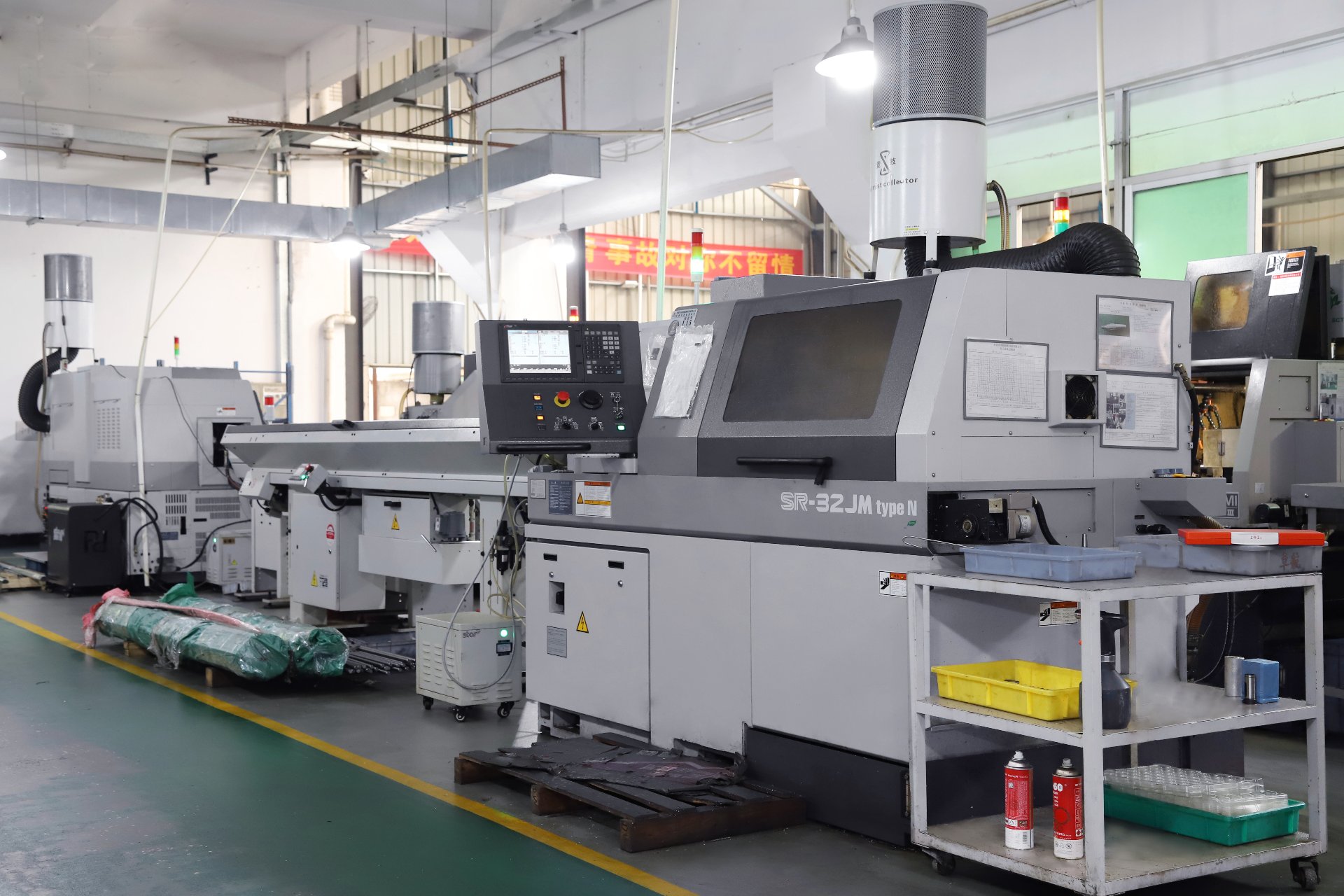
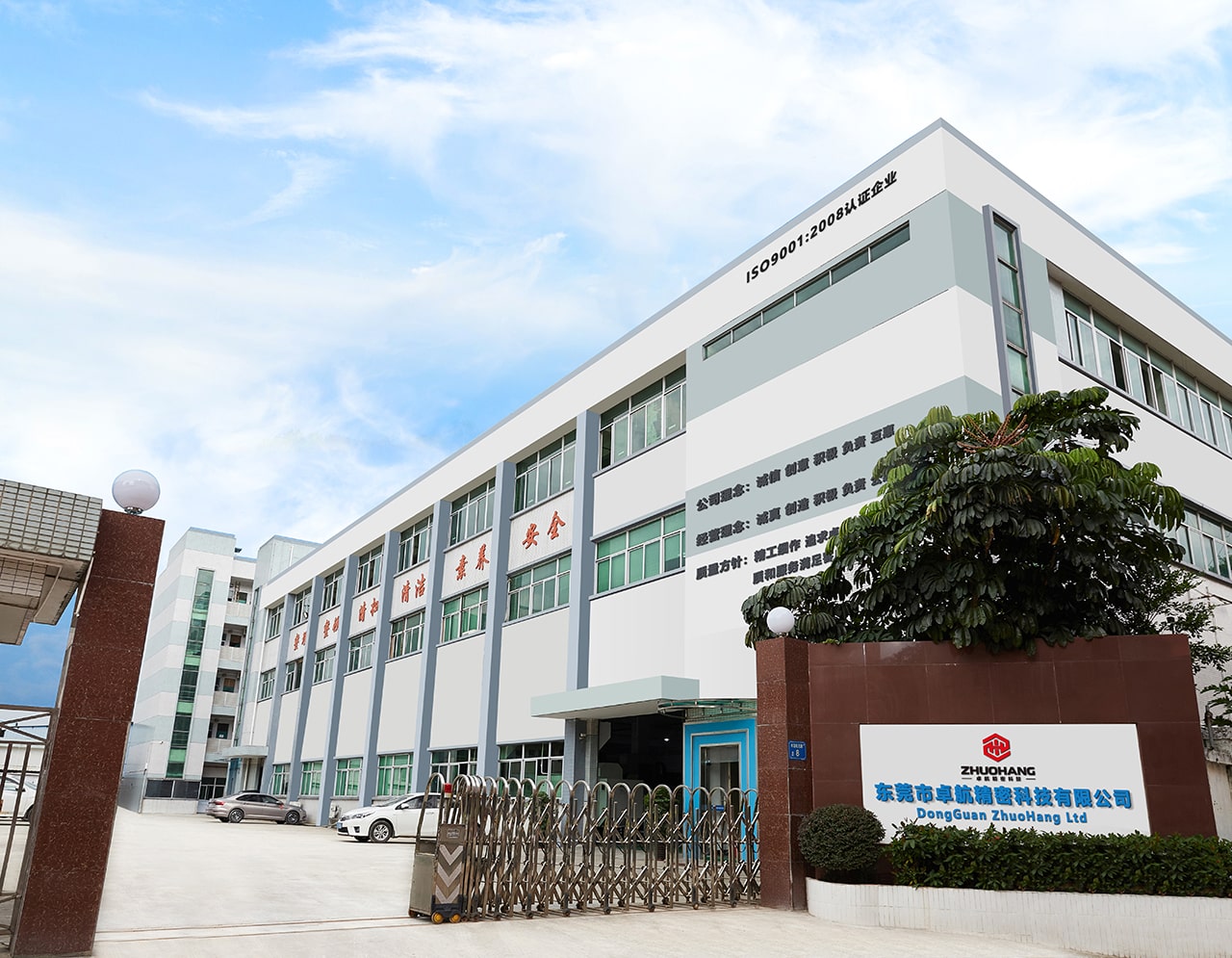
Capability evidence should come as specifics, not slogans. Behind this guide is a 6,800 m2 plant in Dongguan, China running 100+ CNC machines with 100+ staff. The machine list by category:
- 5-axis machining centres (10+) - Mazak VARIAXIS I-600 (510/910/510 mm travel, 12,000 rpm, 22 kW, 71.6 N·m, 30-tool BT40) and Mazak INTEGREX I-250H S (B-axis 0.0001°, 24 kW, 124 N·m, 38-tool HSK-A63). Practical for compound-angle parts, single-setup multi-face prismatic work, and aerospace fittings where datum transfer loss is unacceptable.
- 3-axis / 4-axis machining centres (50+) - Brother SPEEDIO S500Z2N / S700Z2N (10,000 rpm, 14/21-tool ATC, 0.7 s tool-to-tool, Z-axis 2.2 G) and Mazak VCE-430A L / VCE-570C L (10,000 rpm, 118 N·m, 24-tool ATC). Practical for prismatic parts, plates, brackets, housings.
- Swiss-type turning centres (10+) - Citizen Cincom A20-3F7 (Φ20 mm, 10,000 rpm), TSUGAMI B0206-III / B0205-III (Φ20 mm, 0.1 µm), STAR SR-32JII / SR-32J Type N (Φ32 mm, 8,000 rpm). Practical for long, slender rotational parts at ±0.002 mm.
- CNC turning centres (20+) - HEADMAN T70M/1250 (720 mm swing, 117 mm bore, 3,000 rpm, BMT75 12-station turret). Practical for shafts, bushings, flanges up to ±0.002 mm.
- Wire EDM (5+) - Sodick AQ535L (550/350/300 mm travel, ±20° taper, 800 kg workpiece). Practical for hardened tool steel, internal splines, sharp internal corners that milling cannot reach.
- Inspection: Hexagon CMM + 20+ gauges - Hexagon CMM for coordinate measurement, plus vision system, profilometer, hardness tester, coating thickness gauge, XRF for material verification. The 10:1 rule (gauge 10x more accurate than the band) is applied to every feature.
- Machine highlights - VARIAXIS I-600: one-setup multi-face 5-axis + MAZA-CHECK auto-calibration; INTEGREX I-250H S: DONE-IN-ONE mill-turn, B-axis 0.0001° + Ai thermal shield; SPEEDIO S500Z2N / S700Z2N: Z-axis 2.2 G + 0.7 s ATC; Swiss-type: guide-bush switchable + 0.1 µm resolution.
Tolerance: ±0.003 mm CNC milling / ±0.002 mm CNC turning / ±0.002 mm grinding and wire EDM. Capability: Ppk >= 1.67 initial on key characteristics, Cpk >= 1.33 ongoing.
Certificates: ISO 9001:2015 (116024/A/0001/UK/En), IATF 16949:2016 (131941/A/0001/SM/En, with design clause 8.3 excluded, stated openly) and ISO 14001:2015 (116024/B/0001/UK/En), issued to Dongguan Zhuohang Ltd, registration 91441900MA4UWT6X39, founded 2005.
Where we ship: Austria, Belgium, the Czech Republic, Denmark, France, Germany, Greece, Hungary, Ireland, Italy, the Netherlands, Spain, Sweden and the United Kingdom in Europe; Brazil, Canada, Mexico and the United States in the Americas; China, Israel, Japan, Singapore and Sri Lanka in Asia; Australia and New Zealand in Oceania; and South Africa in Africa — plus other countries and regions worldwide, shipped from our base in Dongguan, China.
Contact: Felipe Iglesias, [email protected], +86 13126536955.
Verify the floor yourself — in person or on a live call.
Contact [email protected] or call +86 13126536955 to schedule a visit, an audit, or a video walkthrough of the Swiss-type cell.
Frequently Asked Questions
Who is the company behind Swiss CNC Machining?
In short, The legal company is Dongguan Zhuohang Ltd, trading as Zhuohang Precision Machining Factory and Zhuohang Precision Machining Factory, founded in 2005 and based in Hengli Town, Dongguan, Guangdong, China. The factory covers 6,800 square metres and employs more than 100 people, with over 80% of them skilled technicians.
Where is the factory located?
No. 8, Shuibian Songyuan Road, Hengli Town, Dongguan, Guangdong, China 523470. Dongguan is a manufacturing hub in the Pearl River Delta, and the factory is open to visits and audits.
How many machines run on the floor?
More than 80 production machines plus over 20 inspection instruments. Production includes 3-axis (50+), 4-axis (20+), and 5-axis (20+) milling centers, 25+ lathes, mill-turn machines, and 7+ grinders for surface, centerless, and cylindrical work.
Which Swiss-type machines do you run?
Our Swiss-type capability runs on Citizen Cincom A20, Star SR-32JII, and Tsugami B0205/B0206-III machines with roughly 20 to 32 mm bar capacity — the machine family built for slender shafts, pins, and small-diameter screws.
How many people work at the factory?
In short, More than 100 people, with over 80% of them skilled technicians and around 60% holding five to ten years of experience. The team covers English, Japanese, Portuguese, Spanish, and French on the sales side, with after-sales partners in Japan, the UK, Canada, and Australia.
Are you a manufacturer or a trading company?
A manufacturer. We run our own machines, name their makes and models, and open the floor to visits and live video walkthroughs. A trading company recycles brochures; a manufacturer shows you the machines running — ask us to prove it and we will.
What languages does the team speak?
The sales team works in English, Japanese, Portuguese, Spanish, and French. The main contact is Felipe Iglesias at [email protected], who handles quotes and technical review directly rather than through a reseller.
Can I visit or audit the factory?
Yes. The factory at No. 8, Shuibian Songyuan Road, Hengli Town, Dongguan is open to visits and audits, and we can also arrange a live video walkthrough if you cannot travel. Contact Felipe Iglesias to schedule a visit.
What is your company registration number?
In short, Dongguan Zhuohang Ltd is registered under number 91441900MA4UWT6X39, founded in 2005.
Can you show the certificate numbers for your certifications?
Yes. ISO 9001:2015 is certificate 116024/A/0001/UK/En, IATF 16949:2016 is 131941/A/0001/SM/En, and ISO 14001:2015 is 116024/B/0001/UK/En. We state the numbers rather than asking you to take a logo on faith.
What happens to a mixed or out-of-round bar lot at incoming?
In short, Incoming bar is verified by XRF against the mill certificate before it reaches a machine, and a lot that does not match — the wrong alloy, an out-of-round condition, or a suspect certificate — is isolated and rejected at the door. The point is to catch a bad lot before it ever reaches the guide bushing, where it would bind and push the part off tolerance.
Continue reading: 3 Axis Swiss CNC Machining · 4 Axis Swiss CNC Machining · 5 Axis Swiss CNC Machining
Standards referenced on this page
- ASTM A582/A582M-12 — Standard Specification for Free-Machining Stainless Steel Bars
- ISO 14001 — Environmental management systems — Requirements with guidance for use
- IATF 16949:2016 — Automotive quality management system standard